


The Definitive Guide To Using Multimeters
What To Consider When Buying A Multimeter
Choosing the right multimeter for your job is essential to get accurate and reliable measurements. You will need to consider several factors to make sure it fits your requirements and helps you throughout your work.
When buying a multimeter, you will need to consider:
- Types of Measurements
- Measurement Ranges
- Accuracy & Resolution Requirements
- Portability
- Anticipated Working Conditions
- Display
- Additional Features
- Construction
- Budget
- Probe Types
- Data Capture Options
- Brand Reputation
- Model Reputation
If you are planning on buying a multimeter, read this guide to make sure you make the right decisions.
The Definitive Guide To Using Multimeters
This is the 12th article in our series, The Definitive Guide to Using Multimeters.
This article delves into the considerations you should make before selecting a multimeter.
In this article:
If you missed the start of the series: What Is a Multimeter?: The Definitive Guide to Multimeters, check it out now! You will be able to work your way back to this article quite quickly.
The Definitive Guide to Multimeters: Table of Contents
- What is a Multimeter?
- What is the History of the Multimeter?
- What Does a Multimeter Measure?
- What is an Analog Multimeter?
- What is a Digital Multimeter?
- Should I Use an Analog or Digital Multimeter?
- What is the Difference Between a Handheld and Benchtop Multimeter?
- What is a True-RMS Multimeter?
- What Features and Accessories Should I Look For in a Multimeter?
- How Accurate is Your Multimeter and Why Does it Matter?
- What Are Multimeter Ranges and Why Do They Matter?
- What Do I Consider When Buying a Multimeter? – CURRENTLY READING
- How Do I Use a Multimeter?
- How Do I Properly Maintain a Multimeter?
- How Do I Calibrate a Multimeter?
- What is the Future of Multimeters?
How To Choose A Multimeter: The Multimeter Buyer’s Guide
Choosing the right multimeter for your job is essential to get accurate and reliable measurements. Unfortunately, many people will go out and purchase either the cheapest multimeter they can find or not thing ahead to all the use cases it may have down the road.
You will want to consider several factors to make sure it fits your requirements and helps you throughout your work.
Types Of Measurements
First, determine the types of measurements you need to perform. Nearly all multimeters will measure the common measurements of voltage, current, resistance. However, if you are also looking to measure things such as capacitance, frequency or temperature you will need a more advanced multimeter. Ensure that the multimeter you select can measure these parameters and offers the required measurement ranges and resolutions.
Measurement Ranges
It’s important to select a multimeter that is capable of measuring within the ranges of the types of measurements you are about to inspect (i.e. voltage, current, resistance, etc.). This ensures accuracy and prevents damage to the multimeter itself.
Accuracy & Resolution Requirements
Next, consider the accuracy requirements for your measurements. Determine the level of accuracy needed for your specific application and choose a multimeter that meets or exceeds those accuracy specifications.
Also, be sure to consider the resolution of the multimeter display. A higher resolution allows for more precise readings, enabling you to detect smaller changes in the measured values. If you require precise measurements for your work, choosing a multimeter with a higher resolution display is advisable. Additionally, if the application you are using the multimeter for requires detecting small variations in the measurement, a display with a higher resolution will be required.
Portability
Additionally, consider if you should be looking for a portable or benchtop multimeter. Handheld multimeters will be preferred where portability is important and extreme accuracy is not a requirement. These are far more common. Benchtop multimeters should be your choice if high accuracy is the most important factor of the application or if advanced testing is required.
Anticipated Working Conditions
Don’t forget to consider the anticipated working conditions. If you expect to work in challenging environments, such as high humidity or hazardous areas, choose a multimeter with appropriate safety ratings, and robust construction to withstand such conditions.
Display
Evaluate the display and user interface. The type of display is going to matter most. These days, digital multimeters are going to be your most logical choice. However, there are a few small situations where an analog multimeter may be of interest to you.
Ensure that the multimeter has a clear and easy-to-read display, preferably with a backlight for low-light situations. Consider the usability of the interface, including the presence of dedicated buttons, rotary switches, or digital menu navigation.
Additional Features
Additionally, consider the additional features and functionalities that may be beneficial for your work. Probably the biggest features to consider are whether or not the multimeter has auto-ranging and True RMS capabilities. Additionally, some multimeters offer data logging capabilities, temperature measurement, continuity testing, diode testing, or built-in wireless connectivity for data transfer.
Construction
While not necessarily as important as some of the other criteria, paying attention to the construction of the multimeter should also be considered. The multimeter should be manufactured in a durable way and the unit should be ergonomic to use. If the unit just looks like it will be awkward to use, think about how that will feel when you are 6 hours into using it.
Budget
Of course, you will want to also consider your budget. Multimeters vary in price, and while higher-end models may offer more advanced features and greater accuracy, they may not always be necessary for every application. Evaluate your needs and budget to strike a balance between functionality, accuracy, and affordability.
Probe Types
Consider the probe types that are compatible with the multimeter and whether they meet your specific measurement needs. Test leads will cover nearly every measurement you will need to complete, but don’t forget about the advantages that each of the other types of probes provide. For example, alligator clips will make it far easier for you if you need to sustain a connection for a long period of time. Additionally, ensure that the probes are of good quality, properly insulated, and suitable for the voltages and currents you will be measuring.
Data Capture Options
If you will be using the multimeter for a larger number of tests, you will likely want to consider how you will be recording the data from these measurements. This mostly pertains to digital multimeters, as analog multimeters will most likely leave you with good old-fashioned pen and paper. However, for digital multimeters, there are a plethora of options. The most common will be a USB or RS-232 connection.
Brand Reputation
Another important factor is the brand of multimeter you select. You will want to consider customer reviews and the overall reputation of the brand. Feedback from this will give you insights into the brand’s reliability, customer satisfaction, and overall product quality. Additionally, a more common brand is more likely to have a wide range of aftermarket support for the multimeter.
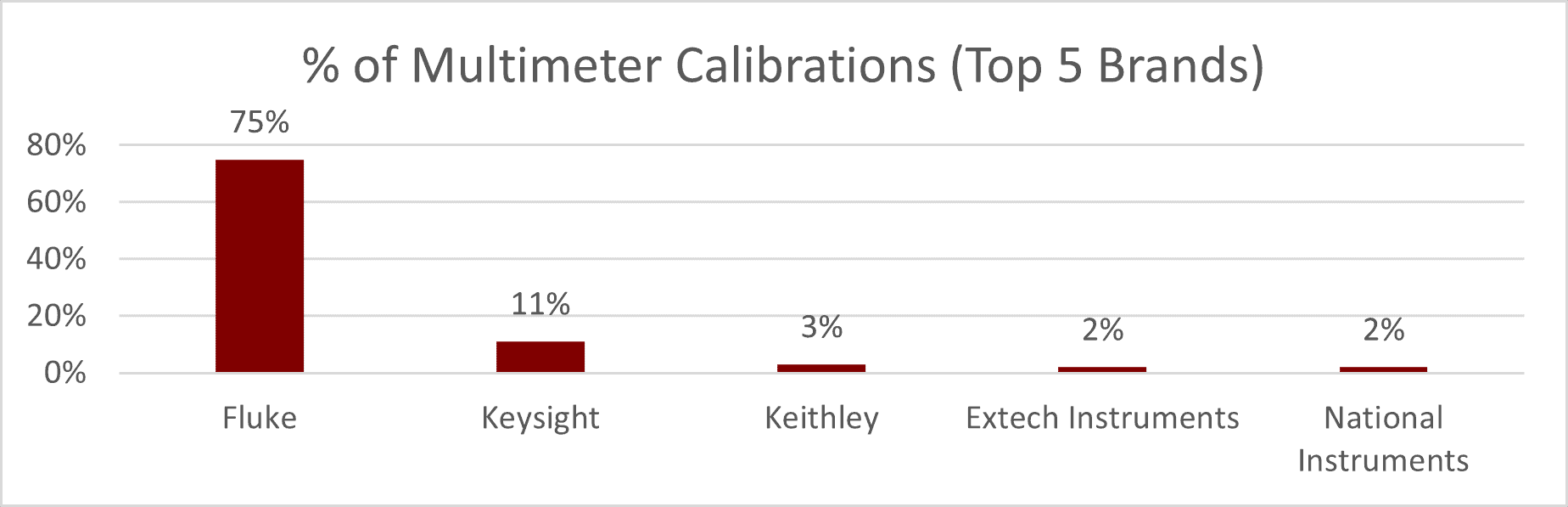
In the multimeter industry, it’s Fluke’s world and the rest of us are just living in it. As you can see in the chart below, about 75% of all multimeters that we see come from the Fluke brand.
| Manufacturer | Approximate Market Share |
|---|---|
| Fluke | 75% |
| Keysight | 11% |
| Keithley | 3% |
| Extech Instruments | 2% |
| National Instruments | 2% |
Of course, it should be noted that this percentage is based only on the items we see through our calibration services. It is possible the overall market share of these companies are different than what is shown here, but chart likely represents a good approximation of the overall industry.
Model Reputation
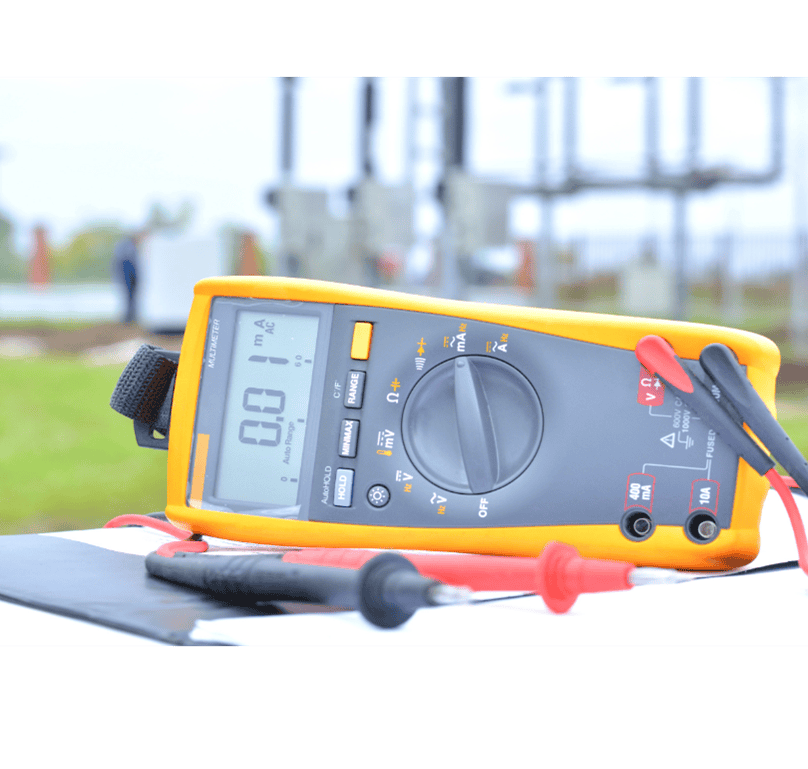
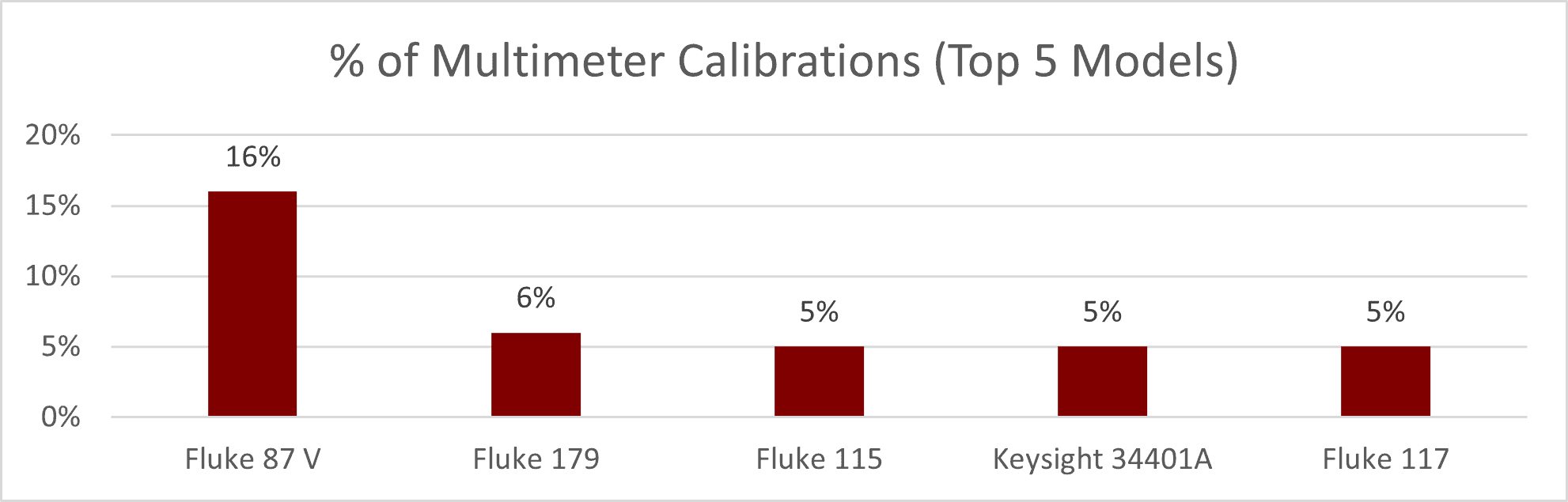
Within those brands, the most common models are a bit more evenly distributed, although Fluke still dominates the industry. The Fluke 87 V is almost the ubiquitous handheld digital multimeter. When you picture a multimeter in your head, you are likely picturing the Fluke 87 V.
| Manufacturer | Approximate Market Share |
|---|---|
| Fluke 87V | 16% |
| Fluke 179 | 6% |
| Fluke 115 | 5% |
| Keysight 34401A | 5% |
| Fluke 117 | 5% |
The same caveats as above should be considered, regarding the accuracy of this market share study.
Additionally, there are plenty of sites out there that will give you valuable, unbiased reviews of each multimeter make and model out there, such as this one. While this specific link provides reviews of multimeters mostly for general home use, it will give you good feedback on how to start looking at them.
What To Consider When Buying A Multimeter FAQs
- Do I need True-RMS in 2025? Yes, for non-linear loads in EVs, solar systems, or modern appliances.
- Is a handheld or benchtop better? Handheld for fieldwork; benchtop for lab precision.
- What’s a good budget multimeter? A $50–$100 DMM with auto-ranging and CAT III rating for home use.
- Are smart multimeters worth it? Yes, for IoT logging in long-term projects like renewable energy monitoring.
What’s Next: The Definitive Guide To Multimeters
Now that you have successfully selected your multimeter, all that is left is to learn how to use and care for it.
In the next section, we will dive into how to use multimeters properly for the best results. Let’s get started and head to Section 13: How To Use A Multimeter.
ISO/IEC 17025 Accredited Multimeter Calibration
At Fox Valley Metrology, we specialize in precision multimeter calibration services for every make and model of multimeter across all our nationwide locations. Our ISO/IEC 17025 accreditation ensures that each instrument is tested to the highest standards. From in-lab service to on-site calibration, we tailor our offerings to fit your schedule and needs.
- ✓ ISO 17025 accredited calibration vendor
- ✓ Broadest calibration scope in the industry
- ✓ 3-5 day turnaround time for laboratory calibrations
- ✓ Pickup and delivery service options available
- ✓ Onsite multimeter calibration service options